A fire-smart garden begins with the relationship between the house, nearby combustible material, and the surrounding landscape. No plant or landscape design can guarantee protection from wildfire.
Begin at the building
Use CAL FIRE’s defensible-space guidance to assess the area nearest the home, then work outward. Keep roofs, gutters, and spaces beneath decks clear of accumulated debris. Landscape work belongs alongside home hardening and emergency planning.
Confirm the requirements for your address
Jurisdiction, hazard designation, site conditions, and current rules affect what applies. Check the Board of Forestry’s Zone 0, 1, and 2 resources and ask your local fire authority about your property, implementation dates, and inspection requirements. Do not use a garden article as a compliance determination.
Choose placement and maintenance together
Avoid treating a plant list as a safety rating. Plant condition, accumulated dead material, mature size, spacing, and the connection to other fuels matter. Have the proposed planting reviewed in the context of the whole site, especially on slopes or near structures.
Pay attention to the first five feet
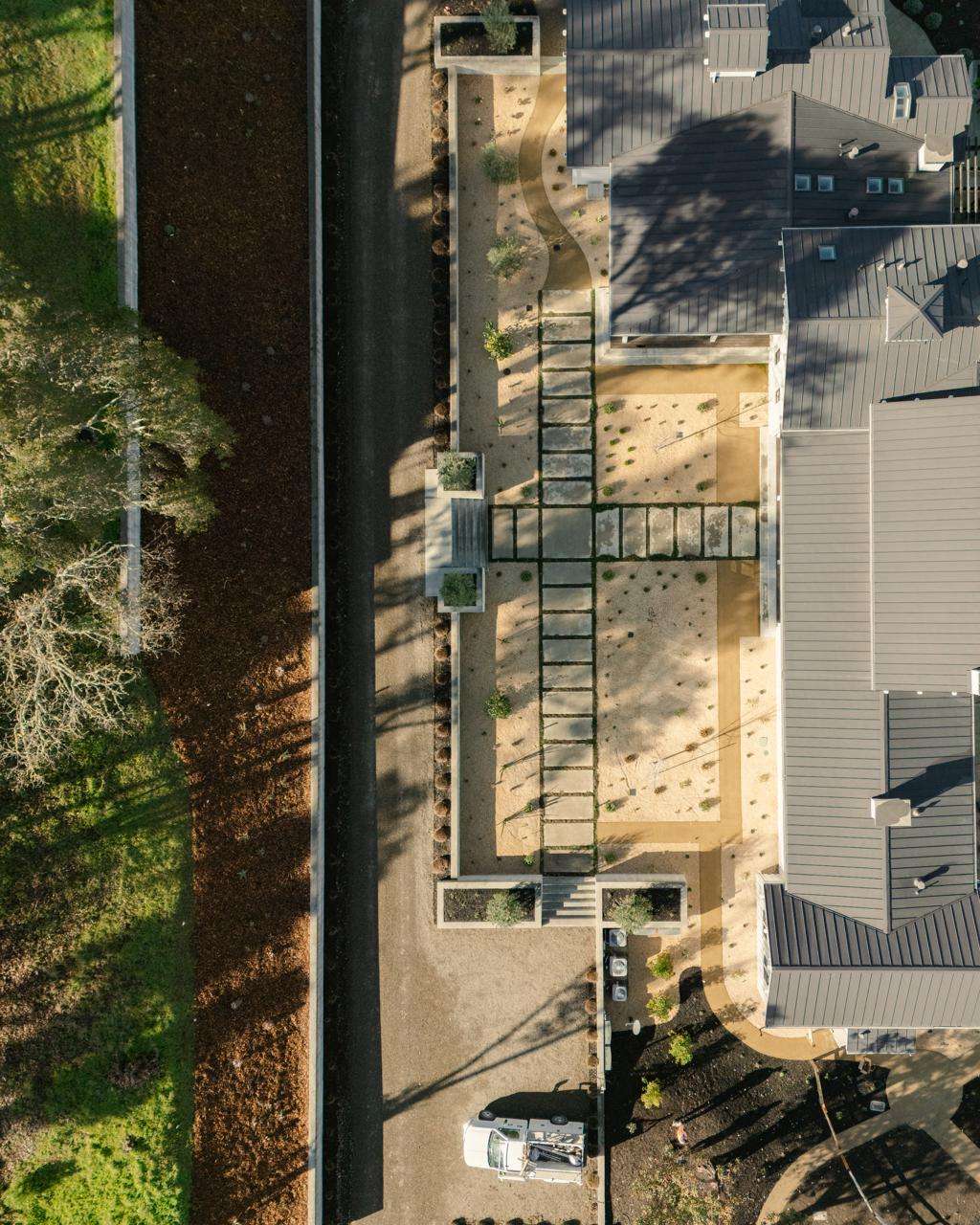
CAL FIRE recommends an ember-resistant area nearest the structure, using noncombustible materials and removing combustible debris. Stone or paving can support that goal, but leaves and other material still need clearing. Check adjoining fences, stored items, decks, and planting rather than considering groundcover alone.
Make upkeep part of the plan
Remove dead vegetation and keep access for regular maintenance. Irrigation should support plant health where appropriate; extra water does not make a plant fireproof. Avoid disturbing established trees or destabilizing slopes without qualified advice.
Turn the assessment into a work list
Record the actions recommended by the responsible fire authority and identify who will perform and maintain each one. Coordinate landscape changes with any required arborist, building, or engineering review. Bring photographs, a list of priorities, and any drawings you already have to a conversation with our team. Request a consultation to discuss your property and next steps.
Use an assessment to define landscape work
Bring any inspection notice and current recommendations from the authority responsible for your address. Divide the requested work into tasks that can be completed now, recurring maintenance, and questions that need specialist advice. This helps a landscape proposal describe actual work without implying that a garden service certifies the property as safe.
Plan for vegetation to change
A landscape is not static after a cleanup or planting project. Growth, seasonal drying, fallen material, and changes in use can alter what needs attention. Discuss how observations will be recorded and how additional work is approved. Keep access routes and the areas identified by your fire authority part of the ongoing conversation.
Evaluate placement as well as plant choice
Avoid relying on a label such as fire-safe to settle a planting decision. Consider the mature form, location, maintenance needs, and relationship to structures in the context of current official guidance. Landscape work is one part of a wider property plan; building details, emergency access, and evacuation planning require their own attention.