Santa Rosa is Sonoma County’s largest city, and its residential landscape character reflects that complexity. A Fountaingrove home rebuilt after the 2017 Tubbs Fire sits in a very different context than a craftsman bungalow on the Westside or a newer subdivision property in Rincon Valley. Getting landscape design right in Santa Rosa requires understanding not just horticultural basics, but the specific neighborhood context, regulatory environment, and climate conditions that shape what works.
This guide is written for Santa Rosa homeowners considering a landscape project — whether a complete redesign, a retrofit for water efficiency and fire safety, or a new construction landscape starting from bare ground.
Santa Rosa’s Landscape Character
Santa Rosa’s neighborhoods each carry distinct landscape identities. The Westside and Railroad Square neighborhoods feature older lots with mature trees, established shrubs, and a mix of Victorian-era and craftsman-influenced gardens. Bennett Valley has a more suburban character with larger lots, open views, and properties that benefit from privacy screening and structured outdoor living spaces. The newer areas of northeast Santa Rosa — Fountaingrove, Rincon Valley, Oakmont — tend toward open, sunny lots where fire-smart design has become a primary driver since 2017.
The through-line across all of these contexts is Sonoma County’s Mediterranean climate: wet winters, dry summers, and a compressed spring planting window. Properties in Santa Rosa proper tend to run slightly warmer and drier than the coast, with summer highs regularly in the 90s in the inland neighborhoods and cooler temperatures near the western edge of the city where marine influence is stronger.
What Drives Landscape Design Decisions in Santa Rosa
Fire history and ongoing risk
For properties exposed to wildfire, review the current defensible-space resources and consult the responsible fire authority. Design planting, surfaces, access, and ongoing maintenance together; confirm requirements for your address rather than inferring them from a neighborhood description.
Check your water provider’s programs
For a property served by Santa Rosa Water, review Santa Rosa Water’s rebate page for Cash for Grass and irrigation-efficiency programs. The city requires a pre-inspection before rebate work starts. Confirm eligibility and the approved scope with the city before including an incentive in the budget.
Clay soil
Much of Santa Rosa sits on heavy clay or clay-loam soils that drain slowly, compact easily, and expand and contract significantly with seasonal moisture changes. Landscape designs that ignore this reality — planting Mediterranean species that require excellent drainage in clay, for example, or specifying paving materials without accounting for soil movement — tend to fail within a few years. Good landscape design in Santa Rosa starts with a realistic assessment of soil conditions.
HOA requirements
Newer developments in east and northeast Santa Rosa frequently operate under HOA guidelines that govern plant height, species selection, fence placement, and the percentage of the front yard that can be hardscaped. Before designing or planting, confirm what constraints apply.
Design Styles That Work Here
California contemporary — Clean lines, native and near-native plants, decomposed granite or permeable paving, and minimal lawn. Well-suited to post-fire rebuilds and to homeowners prioritizing low maintenance and water efficiency. The aesthetic is naturalistic rather than formal, with an emphasis on texture, seasonal change, and ecological function.
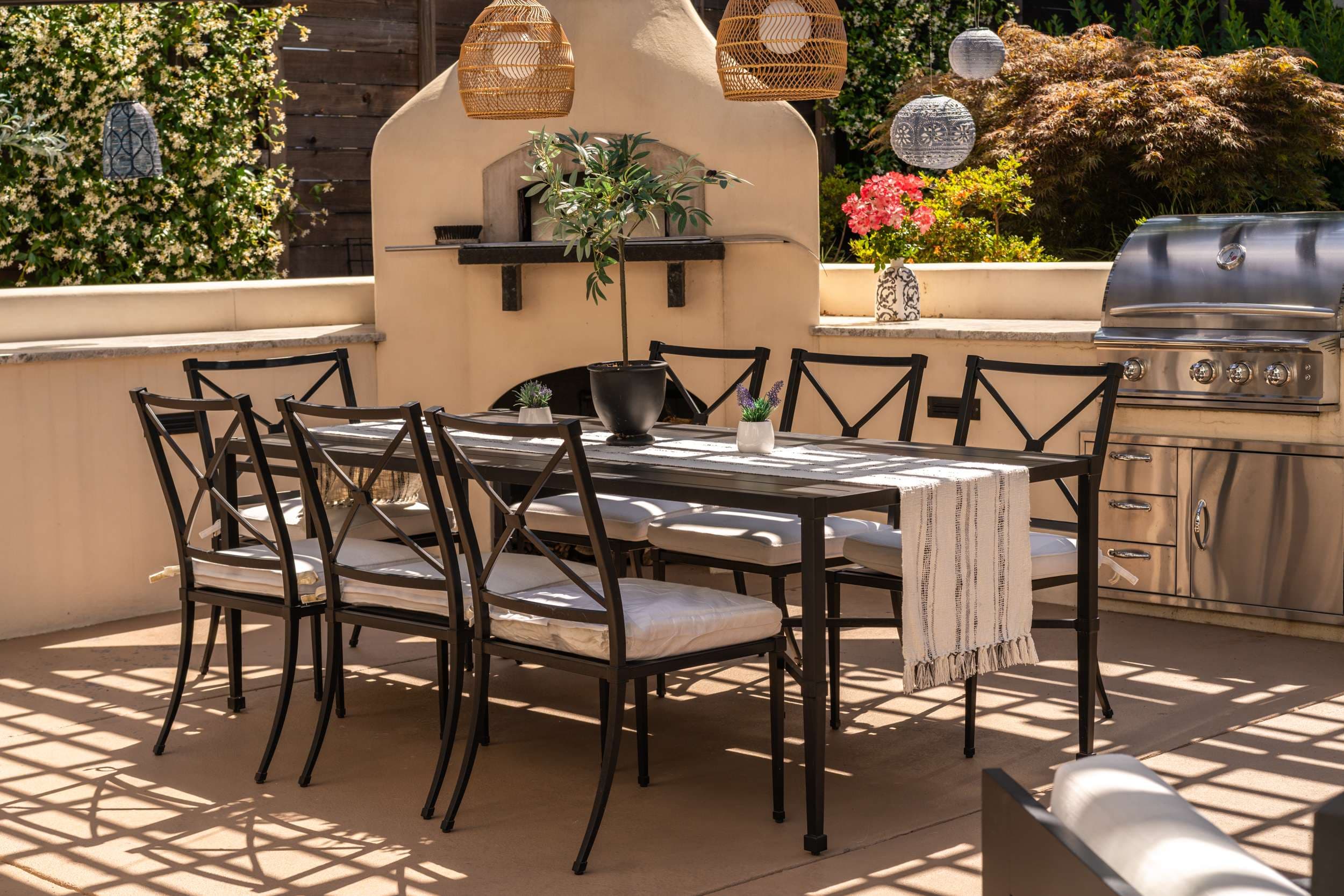
Mediterranean — Olive trees, lavender, rosemary, salvias, and ornamental grasses with flagstone or gravel paving and a shaded terrace for outdoor dining. Well-matched to Santa Rosa’s climate and increasingly popular in established neighborhoods where a more refined aesthetic is expected. Requires good drainage and minimal irrigation once established.
Drought-adapted cottage — A looser, more colorful approach that blends California natives with Mediterranean perennials and drought-tolerant exotics. Works well on Westside and older neighborhood lots where a more traditional garden aesthetic is expected but water efficiency is still a priority. Requires more maintenance than the other two styles but creates a richer, more layered appearance year-round.
What a Professional Landscape Design Process Looks Like
A well-run landscape design process has distinct phases, and understanding them helps homeowners know what to expect and what questions to ask.
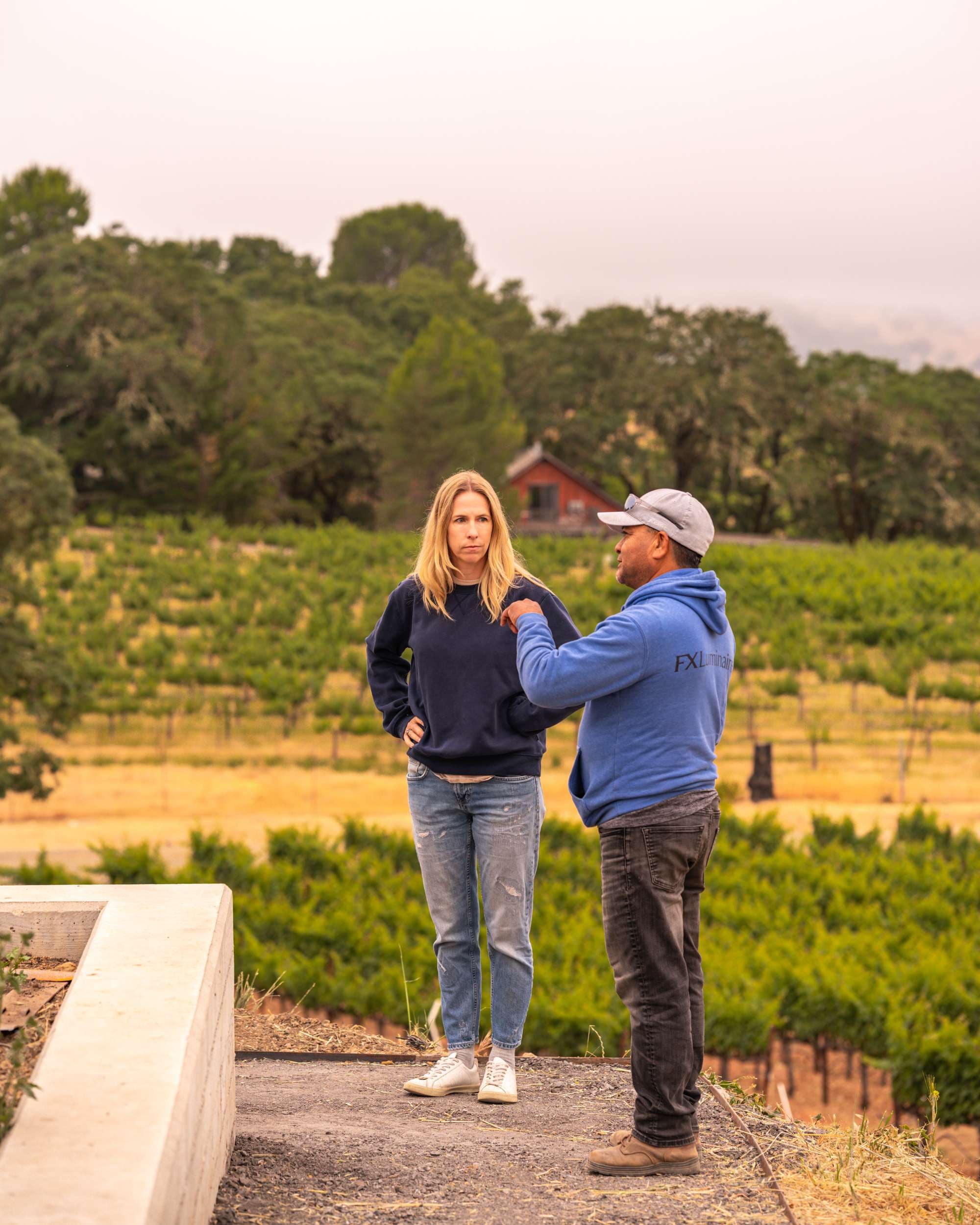
Site assessment — The designer visits the property to assess soil, drainage, sun and shade patterns, existing vegetation, views to preserve or block, access points, and how the family actually uses the space. A thorough site assessment takes one to two hours and is the foundation for everything that follows.
Programming and concept — The designer develops a concept based on the site assessment and client input. At this stage, the focus is on spatial organization: where do different activities happen, how do they relate to each other and to the house, what is the overall aesthetic direction. A concept plan is typically a diagrammatic drawing rather than a detailed design.
Planting plan and construction documents — The full design phase produces the documents contractors need to build and plant. This includes a dimensioned layout plan, planting plan with species and quantities, irrigation plan, and specifications for materials. The quality of construction documents directly determines the quality of contractor bids and the fidelity of the final result to the original design intent.
How to Evaluate a Landscape Design Firm in Santa Rosa
The landscape design and installation market in Sonoma County ranges from sole-practitioner designers working with a legal pad to full-service design-build firms with licensed landscape architects on staff. The right choice depends on project scope and budget.
Questions worth asking before hiring anyone: How long have you been designing in Santa Rosa specifically? Can you show me installed projects in similar neighborhoods? Do you handle the installation as well as the design, and if so how is that relationship structured? What is your approach to post-fire defensible space design? Do you have a licensed landscape architect on staff or available for review?
Red flags include firms that propose design without a site visit, contractors who offer “free design” with installation contracts (the design quality reflects the price), and designers who cannot provide local installed examples of their work.
Permit Requirements for Santa Rosa Landscape Projects
Before work begins, confirm the complete scope with the City of Santa Rosa building department. Retaining work, grading, structures, utilities, and protected trees may need review; do not rely on a single height or quantity threshold.
The City of Santa Rosa’s planning and building departments have specific rules around tree removal, particularly for heritage oaks. Removing a protected tree without permits can result in significant fines. Confirm the status of any mature trees on the property before including removal in a landscape plan.
Cost Ranges for Landscape Design in Santa Rosa
Design fees depend on the deliverables, site information, revisions, and coordination included. Ask for a written scope and identify any separately contracted survey, engineering, or construction support.
For a design-build proposal, separate design, enabling work, hardscape, irrigation, planting, and other major components. Ask how assumptions and changes will be handled before comparing totals.
Check the likely construction scope while design choices are still flexible. Agree on priorities and possible phases before completing detailed selections.
Why Design Matters Before Construction Begins
The instinct for many homeowners is to skip formal design and go straight to installation — hire a contractor, agree on a general direction, and let them figure out the details. This approach is common and frequently regretted.
Without a design, contractors bid on different scopes, making cost comparison impossible. Without construction documents, installation quality depends entirely on the contractor’s interpretation of verbal instructions. Without a planting plan, plant selection defaults to whatever is available at the nursery on the day of installation rather than a considered palette suited to the site. The cost of good design is consistently offset by the savings in avoiding mistakes that are expensive to correct after the fact.
Geared for Growing in Santa Rosa
Geared for Growing has designed and installed landscapes across Santa Rosa for over 40 years. We understand the specific conditions that shape what works here — the clay soils, the fire risk, the water constraints, the neighborhood contexts that range from Westside craftsman blocks to post-fire rebuilds in Fountaingrove.
We offer full-service landscape design, installation, and ongoing maintenance for residential and commercial properties throughout Santa Rosa and Sonoma County. Contact us to discuss your project.