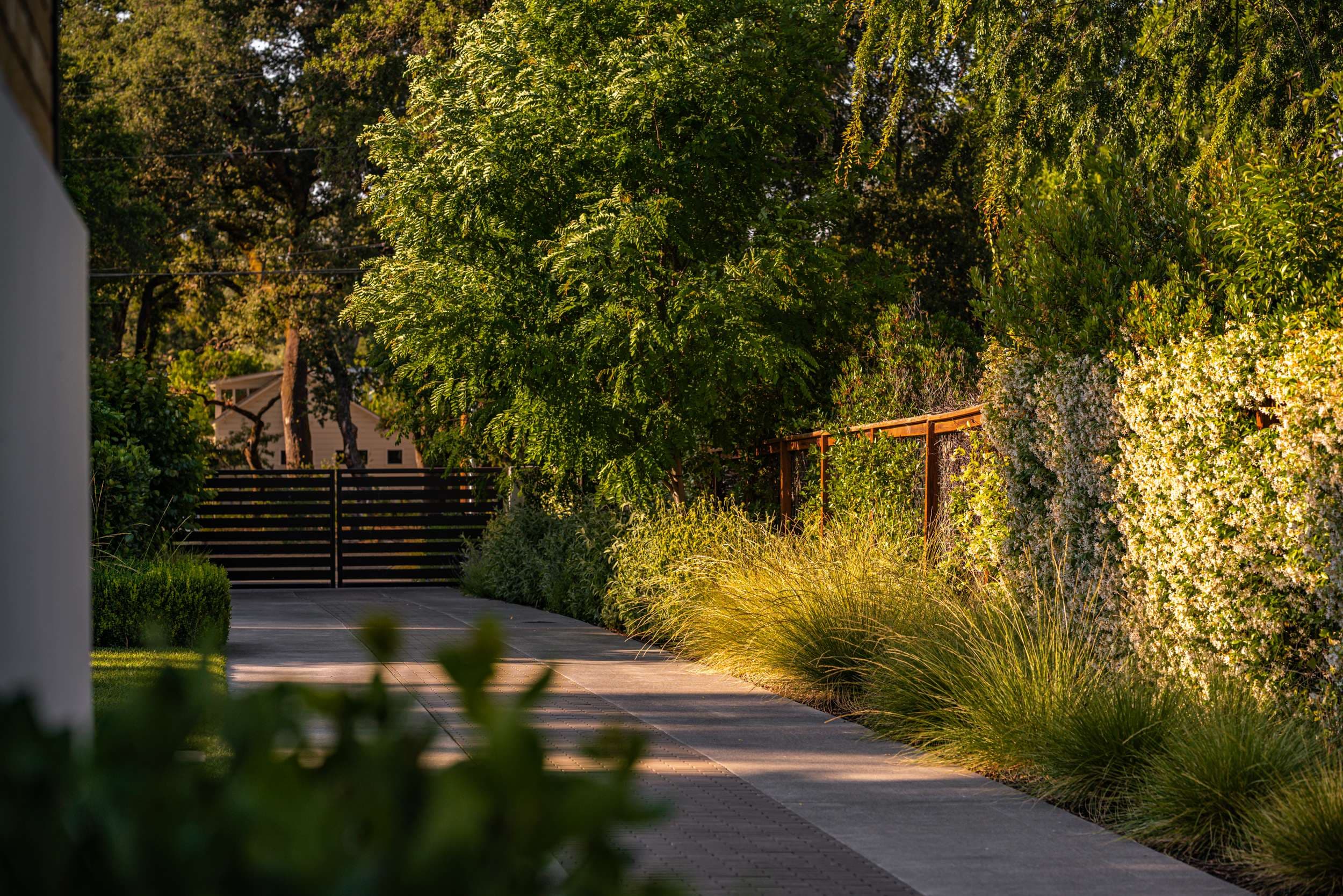
Replacing lawn is a garden project, not simply a removal task. The finished planting or surface, irrigation changes, and establishment care belong in the same plan.
Choose a removal method for the site
Identify the existing turf and weeds before choosing a method. Sod removal, sheet mulching, and other approaches differ in disturbance, disposal, timing, and follow-up weed management. UC IPM’s sheet-mulching guidance explains the method and its limitations; avoid assuming one approach suits every lawn.
Price the complete transformation
Include removal or suppression, soil assessment, irrigation changes, plants or surface materials, installation, disposal, and care during establishment. Ask whether paths, edging, lighting, or drainage need separate work. Identify materials and quantities so proposals can be compared.
Decide what the new space should do
A planted front garden, a play area, and a seating terrace have different requirements. Preserve useful access and consider views from inside the house. Choose plants for exposure, soil, mature size, and the maintenance you want to provide.
Check rebates before work begins
Contact your water provider before covering or removing the lawn. Use the provider finder to check current eligibility, funding, inspections, and application timing. An advertised program is not approval for your property; wait for the provider’s instructions before starting eligible work.
Plan irrigation for the replacement
New planting still needs establishment care. Group plants with compatible water needs and check that the revised irrigation can serve them appropriately. Do not assume the old lawn schedule will suit the new garden.
Allow for a developing garden
Discuss planting season, weed control, and follow-up visits. Sheet mulching does not impose a universal waiting period: the approach depends on conditions and the planting plan. Sonoma County Master Gardener guidance offers local water-wise planning resources.
Compare ongoing care realistically
A lawn replacement may change the kind of maintenance you need rather than eliminate it. Budget for weeding, pruning, irrigation checks, and plant replacement where needed. Use your own water bills and care costs for comparisons; do not rely on a promised payback period.
Plan the next step
Bring photographs, a list of priorities, and any drawings you already have to a conversation with our team. Request a consultation to discuss your property and next steps.
A lawn conversion is a replacement project
Define what the area should become before pricing removal. A planted garden, a productive space, and a seating area have different irrigation, soil, surface, and access needs. Include the edges where the converted area meets existing paths or beds, and identify any trees or planting that must remain protected during work.
Discuss removal and site preparation
The appropriate removal method depends on the existing lawn, weeds, intended planting, timing, and site conditions. Ask what is included in disposal and preparation and how recurring growth will be managed. Avoid treating removal alone as the full scope; the new landscape needs a clear plan for installation and care.
Budget attention for establishment
New planting needs appropriate watering and observation while roots develop. Clarify who checks the irrigation, replaces failed components, and handles early weed growth. If a rebate is available, obtain the provider’s requirements before work starts and keep the requested documentation. Do not subtract an unconfirmed incentive from the amount you can commit to the project.