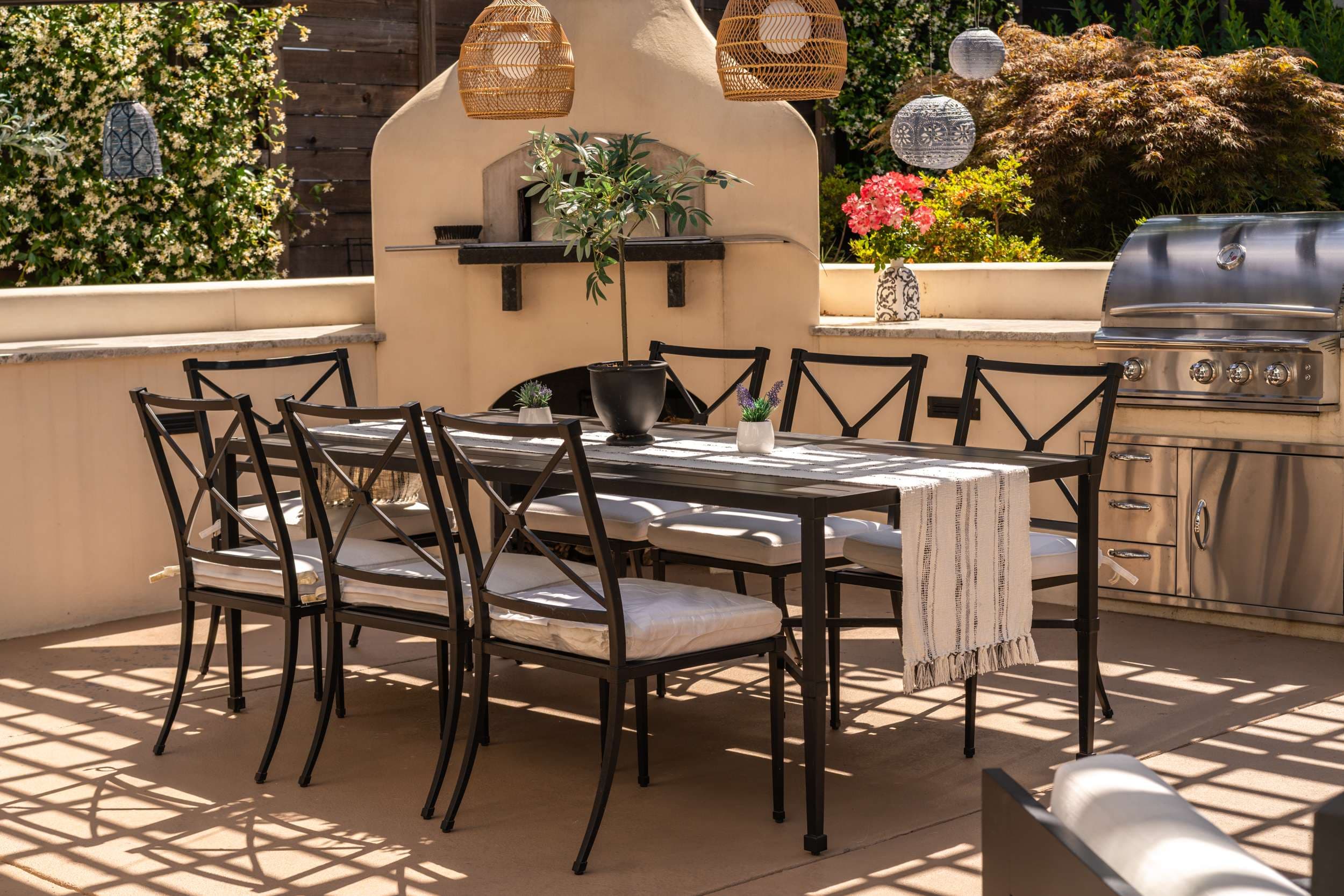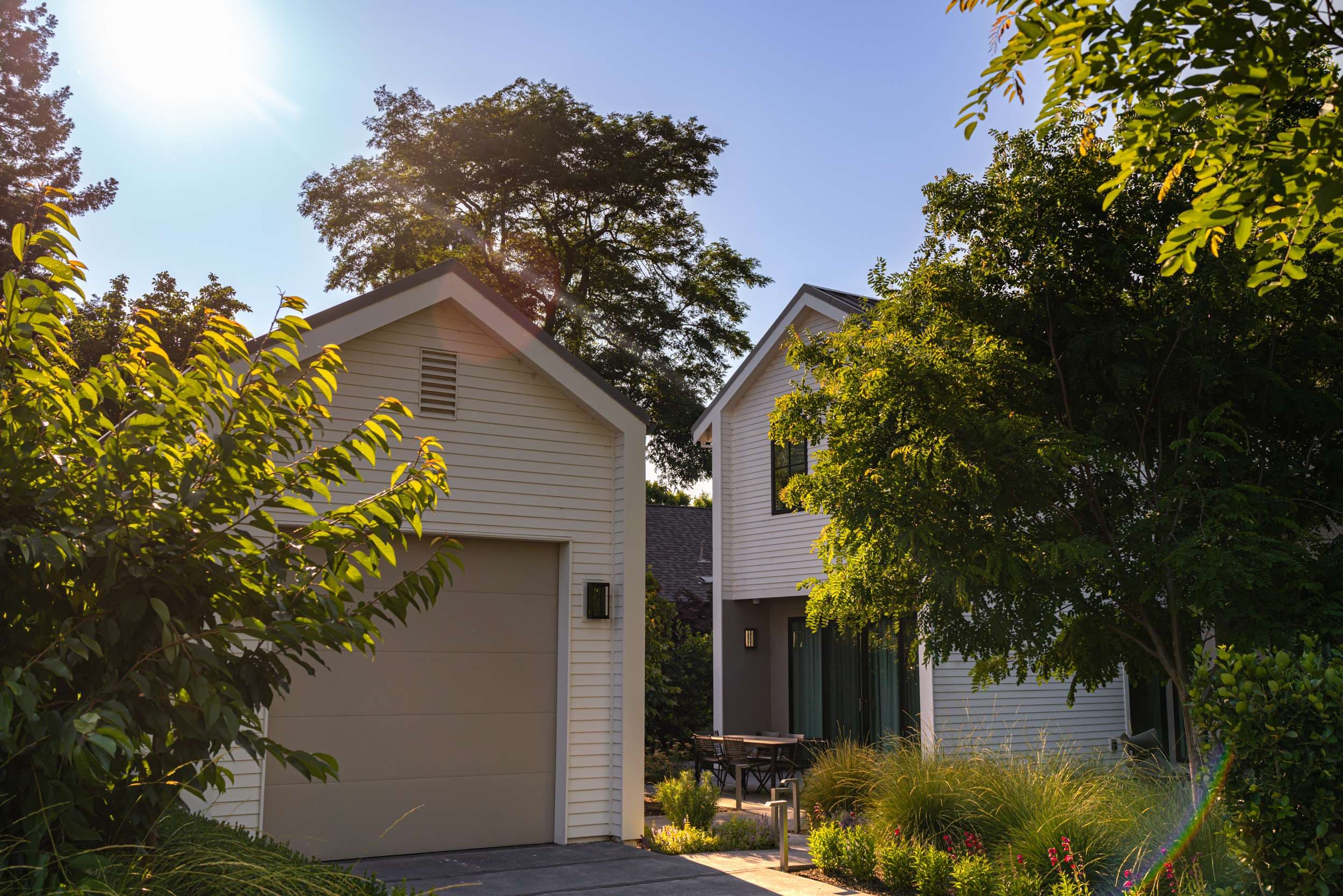
Water is not unlimited in Sonoma County. Between drought years, water restrictions, and rising costs, every homeowner eventually asks the same question: How do I keep my landscape beautiful without drowning it in water?
After 43 years designing and maintaining landscapes across Wine Country, we have learned what actually works here — not just what looks good in a catalog or survives in Southern California. Since 1983, Geared for Growing has helped thousands of Sonoma County homeowners transition to landscapes that honor both the beauty and the reality of where we live.
Understanding Sonoma County Microclimates
Sonoma County is not one climate — it is dozens. Healdsburg summers regularly hit 100°F while Bodega Bay rarely breaks 70°F. The hills above Dry Creek Valley have different soil than the flatlands near the Russian River. The fog belt that creeps inland from the coast can reach Sebastopol but rarely makes it to Windsor, creating drastically different growing conditions within a 20-minute drive.
This matters for plant selection. A plant that thrives in Sebastopol may struggle in Cloverdale. Before choosing plants, understand your specific conditions:
- How many hours of direct sun does each area get?
- What is your soil type? (Clay, sandy, loam?)
- Do you have natural water features or drainage issues?
- What is your USDA hardiness zone? (Sonoma County spans 9a to 10b)
The Sunset Western Garden Book remains one of the most useful references for our area because it accounts for these microclimates in ways the USDA zone map cannot. Sunset zones 14, 15, and 17 all appear within Sonoma County, each with its own temperature ranges, fog influence, and rainfall patterns. Understanding which Sunset zone you occupy is often more valuable than knowing your USDA zone alone.
How Much Water Can You Actually Save?
Water use can change when planting and irrigation are redesigned together. The amount depends on the starting landscape, weather, plant establishment and irrigation management. Use your own meter or billing records to compare seasonal use, and refer to UC Master Gardeners’ irrigation guidance for practical conservation steps.
Use your current water bills to understand outdoor use and ask your provider about applicable rates and programs. A water-wise redesign can change irrigation demand, but savings depend on the original garden, the replacement planting, and ongoing operation.
The environmental math matters, too. During the severe drought years of 2013 to 2015 and again in 2020 to 2021, mandatory restrictions forced homeowners to scramble. Those who had already transitioned to water-wise landscapes barely noticed. Their plants were adapted, their irrigation was efficient, and they were not losing sleep over brown lawns.
Sonoma County Water Rebates and Incentives
Find the program for your property
Start with the water provider named on your bill, or find your water provider. Use the Sonoma-Marin Saving Water Partnership rebate directory to find programs for that provider.
Before removing lawn or purchasing equipment, ask the provider about eligibility, funding, inspections, application timing, qualifying plants and equipment, and the documentation needed. Use only a confirmed rebate amount in your project budget.
Best Drought-Tolerant Plants for Sonoma County
These are plants we install repeatedly because they perform reliably across most of Sonoma County. Our recommendations draw on decades of hands-on experience and align with guidance from the UC Master Gardener Program of Sonoma County and the UC Davis Arboretum All-Stars list.
Full Sun California Natives (6+ Hours Direct Sun)
- Manzanita (Arctostaphylos) — Multiple varieties available, from ground-hugging ‘Emerald Carpet’ to the upright ‘Howard McMinn’ that reaches 6 feet. Evergreen foliage, beautiful mahogany bark, and virtually no irrigation once established. One of the most dependable plants we install.
- California Lilac (Ceanothus) — Stunning blue or white flowers in spring, fast-growing, and remarkably drought-tolerant. ‘Ray Hartman’ and ‘Concha’ are excellent choices for Sonoma County. Some varieties can be short-lived (8 to 15 years), so plan for eventual replacement.
- Toyon (Heteromeles arbutifolia) — Red berries in fall and winter make this a bird magnet. Grows as a large shrub or small tree. Native to Sonoma County hillsides and extremely tough once established.
- Deer Grass (Muhlenbergia rigens) — Graceful movement in the breeze, attractive seed heads, and virtually indestructible. Excellent as a lawn substitute or border plant. Tolerates heavy clay soil.
- Buckwheat (Eriogonum) — California buckwheat and Santa Cruz Island buckwheat are pollinator powerhouses. Low-growing varieties make excellent ground covers. The dried flower heads add winter interest in warm bronze tones.
- Coffeeberry (Frangula californica) — Versatile evergreen native that tolerates a wide range of conditions. Berries attract birds. Grows 4 to 8 feet depending on variety.
- California Fuchsia (Epilobium canum) — Brilliant orange-red tubular flowers from late summer through fall, exactly when hummingbirds need nectar most. Spreads to form a ground-covering mat.
- Yarrow (Achillea millefolium) — Native yarrow provides flat-topped flower clusters in white, pink, or yellow. Extremely low water once established and tolerates poor soil.
Part Shade to Full Shade Natives (2-4 Hours Sun)
- Western Sword Fern (Polystichum munitum) — Lush, evergreen fronds that create a woodland feel. Thrives under oaks and in north-facing areas. Once established, survives on rainfall alone in most of Sonoma County.
- Coral Bells (Heuchera maxima) — Native coral bells offer attractive foliage and delicate flower spikes. Excellent in shaded borders and under trees.
- Douglas Iris (Iris douglasiana) — Beautiful purple to lavender flowers in spring. Forms clumps in part shade and tolerates dry summers with ease.
- Creeping Snowberry (Symphoricarpos mollis) — Low-growing ground cover for shaded areas. White berries in fall. Excellent under oaks.
- Wood Fern (Dryopteris arguta) — Deciduous fern native to Sonoma County woodlands. Grows well in dry shade once established.
Mediterranean Plants (Full Sun)
- Lavender — Multiple varieties for different looks. English lavender (Lavandula angustifolia) for cooler areas, Spanish lavender (L. stoechas) for warmer spots, and ‘Goodwin Creek Grey’ for a reliable hybrid. All attract pollinators.
- Rosemary — Edible, fragrant, tough as nails. Prostrate varieties make excellent ground covers on slopes. Upright forms can serve as informal hedges.
- Olive trees — Classic Wine Country aesthetic. Non-fruiting varieties like ‘Swan Hill’ and ‘Wilsonii’ eliminate the mess of fallen fruit. Extremely long-lived.
- Rockrose (Cistus) — Spring flowers in white, pink, or purple. Deer resistant and thrives in poor soil. Excellent on slopes for erosion control.
- Salvia (Ornamental Sage) — Both native and Mediterranean species perform exceptionally here. Autumn Sage (Salvia greggii) blooms nearly year-round. Cleveland Sage (S. clevelandii) offers intensely fragrant blue flowers.
- Westringia (Australian Rosemary) — Fine-textured evergreen that tolerates drought and shaping. Makes an excellent low hedge or border plant. Softer look than traditional rosemary.
Seasonal Color Strategies for Drought-Tolerant Gardens
One of the most common concerns we hear is that drought-tolerant landscapes look brown and barren. This could not be further from the truth when the garden is designed with seasonal interest in mind. The key is selecting plants that bloom at different times throughout the year so something is always happening in your garden.
Winter (December through February)
Manzanita blooms with tiny urn-shaped flowers in white and pink. Toyon berries glow red against dark green foliage. California native grasses like Purple Needlegrass (Nassella pulchra) provide golden texture. This is also when deciduous plants reveal their architectural branching structure.
Spring (March through May)
The showstopper season. California Lilac erupts in clouds of blue. Rockrose flowers open. Iris, California poppies, and lupine provide bold color. Lavender begins its long bloom period. Redbud trees (Cercis occidentalis) light up with magenta flowers before leafing out.
Summer (June through August)
Salvias carry the show through the hottest months. Buckwheat attracts butterflies with its pom-pom flower clusters. Ornamental grasses reach their peak height. Yarrow and blanket flower provide warm tones. The silvery foliage of artemisia and dusty miller shimmers in the heat.
Fall (September through November)
California Fuchsia lights up with hummingbird-magnet orange flowers. Native grasses develop beautiful seed heads. Autumn Sage (Salvia greggii) enters its second heavy bloom. Deciduous species like Western Redbud and California Grape show fall color.
Design Principles for Water-Wise Landscapes
Drought-tolerant does not mean desert. The most successful water-wise landscapes follow these principles:
- Hydrozoning — Group plants by water needs. Put thirsty plants together near the house where you see them daily. Put tough plants at the property edges.
- Reduce lawn thoughtfully — You do not have to eliminate grass entirely. A small, functional lawn for kids or pets makes sense. A half-acre of unused turf does not.
- Use permeable hardscape — Gravel, decomposed granite, and permeable pavers let water soak into the soil rather than running off.
- Choose mulch for the site. Mulch can help soil retain moisture. Consult UC Master Gardeners’ mulch guidance for material and placement considerations, including fire concerns near structures.
- Create layered plantings — Combine trees, shrubs, perennials, and ground covers the way nature does. A layered approach shades the soil, reduces evaporation, and creates habitat complexity that looks lush and intentional rather than sparse.
- Use boulders and rock features — Well-placed stone adds year-round structure and visual weight. Natural rock retains warmth for nearby plants and creates microclimates that can expand your planting options.
- Design with paths and gathering spaces — Hardscape areas like patios, pathways, and seating areas reduce the total irrigated area while making the garden more livable. A garden you use is a garden you love.
Irrigation for Drought-Tolerant Landscapes
Even drought-tolerant plants need water to establish. The first two years are critical.
Choose irrigation for the planting. Drip can suit many planted beds, but system choice and scheduling should reflect the roots, soil and exposure. Check for leaks and runoff and adjust as plants grow.
Match the controller to the site. EPA WaterSense explains how weather-based and soil-moisture-based controllers work. Correct programming and maintenance matter; check with your provider before assuming a particular product qualifies for an incentive.
Plan establishment watering separately from long-term care. Reduce irrigation only as appropriate for the plants, soil and weather; a drought-tolerant label does not guarantee that a garden can rely on rainfall alone after a fixed number of years.
Year-Round Maintenance Calendar for Water-Wise Landscapes
Drought-tolerant does not mean no maintenance, but it does mean less — and different. Here is what to expect throughout the year in Sonoma County:
Winter (December through February)
- Plant new additions — this is the ideal time, as winter rains help with establishment
- Prune deciduous shrubs and trees while dormant
- Check and repair irrigation systems before spring
- Add fresh mulch to beds (3 to 4 inches deep, kept away from plant crowns)
Spring (March through May)
- Cut back ornamental grasses before new growth emerges
- Deadhead early bloomers to encourage repeat flowering
- Weed before the ground dries out — spring weeds pull easily from moist soil
- Adjust irrigation schedule as temperatures rise
Summer (June through August)
- Monitor newly planted areas for stress — deep, infrequent watering is better than shallow, frequent
- Resist the urge to overwater established drought-tolerant plants — many actually suffer from too much summer water
- Deadhead salvias and other repeat bloomers to extend flowering
- Check mulch depth — replenish if it has decomposed below 2 inches
Fall (September through November)
- Plant California natives — fall is the natural planting season, timed with the onset of winter rains
- Begin reducing irrigation as temperatures drop
- Clean up dead material and remove fire-hazard debris (especially important in Sonoma County)
- Divide perennials that have outgrown their space
Common Mistakes to Avoid
- Planting in summer — Fall is the ideal planting season in Sonoma County. Plants establish roots during winter rains and are ready for summer.
- Ignoring deer — If you have deer pressure, factor it into every plant choice. Deer-resistant does not mean deer-proof, but starting with plants they typically avoid saves heartbreak.
- Going too fast — Ripping out lawn and planting everything at once often fails. Phased approaches let you learn what works on your property.
- Overwatering established plants — Many California natives, particularly Manzanita and Ceanothus, are susceptible to root rot from excessive summer irrigation. Once established, less is genuinely more.
- Choosing plants only for flowers — Foliage color, texture, and form carry the garden for 10 to 11 months of the year. Select plants with interesting leaves and structure, not just bloom color.
- Skipping the soil preparation — Even drought-tolerant plants benefit from properly amended soil at planting time. Organic matter improves drainage in clay soil and water retention in sandy soil, giving roots a better start.
Ready to Create Your Water-Wise Landscape?
If you are ready to reduce water use without sacrificing beauty, we would love to help. With 43 years of experience designing landscapes specifically for Sonoma County conditions, we know which plants thrive in your neighborhood and how to create a garden that looks better with each passing year. Schedule a consultation and we will walk your property together to discuss what is possible. You can also reach us at 707-473-4333.
Related guides: Xeriscaping your front yard | Lawn removal costs | Efficient irrigation