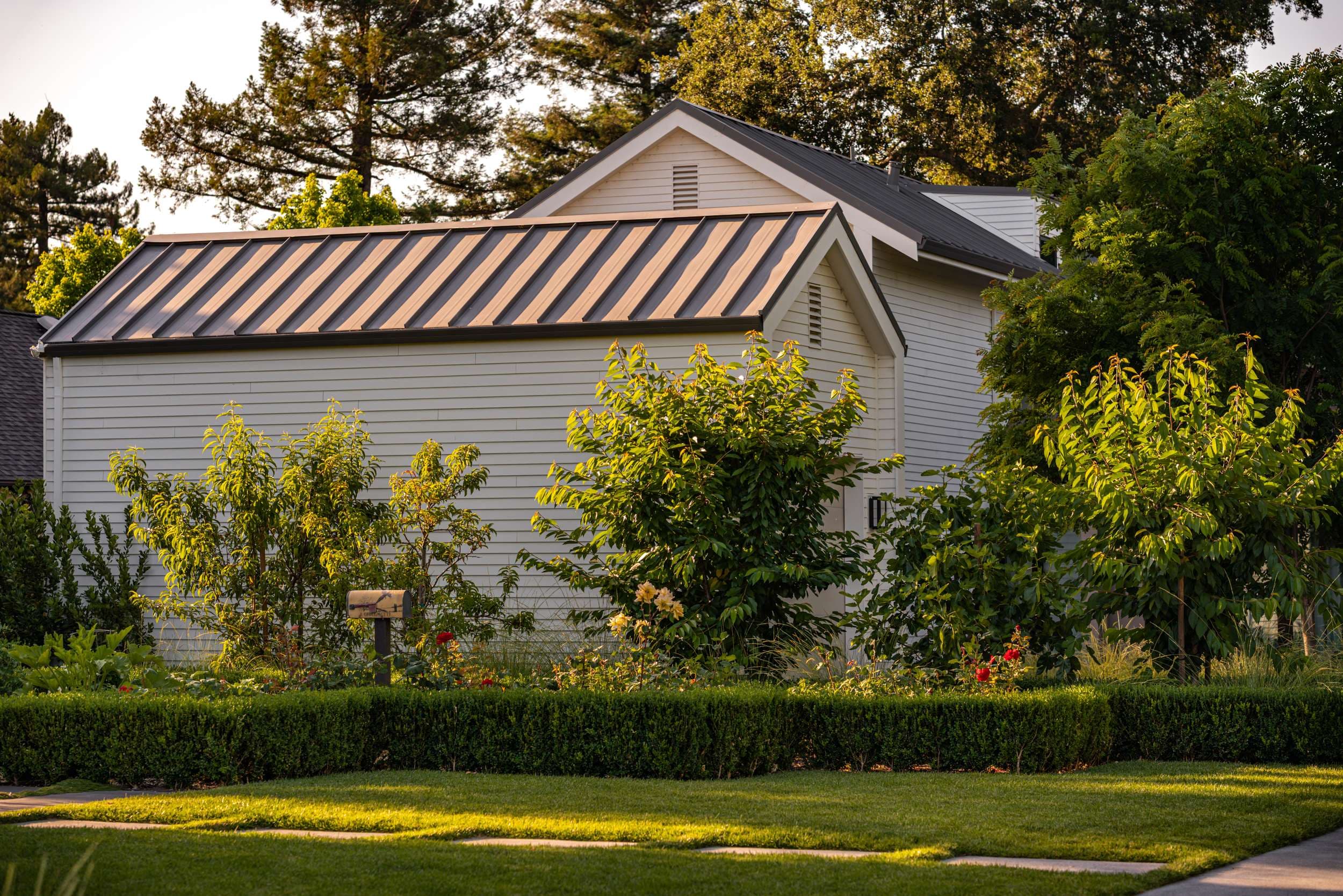
Xeriscaping isn’t about rocks and cacti. Done right, a xeriscaped front yard is lush, colorful, and inviting — it just doesn’t need much water to stay that way.
In Sonoma County, where summer droughts are normal and water costs keep rising, xeriscaping makes practical and financial sense. Here’s how to transform your water-hungry lawn into a beautiful, sustainable landscape.
What is Xeriscaping?
Xeriscaping (from the Greek xeros, meaning dry) is landscape design that minimizes water use. The key principles:
- Right plant, right place — matching plants to your site’s conditions
- Hydrozoning — grouping plants by water needs
- Efficient irrigation — drip systems, smart controllers
- Soil improvement — better water retention and drainage
- Mulching — reducing evaporation
- Limited turf — lawn only where it’s used and enjoyed
Xeriscaping isn’t zero-scaping. It’s smart landscaping.
Step-by-Step: Converting Your Front Yard
A lawn-to-xeriscape conversion is one of the most impactful changes you can make to your property. Here is how the process works, from first assessment to finished landscape.
Step 1: Assess Your Site
Before removing a single blade of grass, map your front yard’s conditions. Note where the sun hits at different times of day, where water pools after rain, and where the soil is compacted from foot traffic. Identify existing trees you want to keep — their root zones will influence plant selection and irrigation design. In Sonoma County, your site likely falls within USDA hardiness zones 9a through 10b and Sunset climate zones 14 through 17, but microclimates vary block by block.
Step 2: Remove the Lawn
Choose the lawn-removal method for the turf, weeds, site, and planting plan. Sheet mulching and sod removal differ in disturbance and follow-up needs. UC IPM guidance explains sheet mulching; it does not impose a universal six-to-eight-week waiting period.
Step 3: Amend the Soil
Match soil preparation to the site and selected plants. Do not assume every bed needs rich amendment: UC Master Gardeners’ plant-selection guidance notes that some Mediterranean and California native plants do not thrive in rich soils. Assess drainage and plant requirements before deciding what to add.
Step 4: Install Irrigation
Design irrigation around plant groups, soil and exposure. Drip may suit planting beds, while other areas can need a different approach. A properly selected and programmed controller can help match watering to conditions; EPA WaterSense explains weather-based and soil-moisture-based options.
Step 5: Install Hardscape
Before planting, install any pathways, borders, dry creek beds, or boulders. Hardscape provides the structural framework that keeps a xeriscape from looking like an unplanned meadow. A dry creek bed serves double duty: it adds visual interest and manages stormwater runoff during our heavy winter rains.
Step 6: Plant in Zones
Group plants by water needs — this is hydrozoning, and it is the single most important design decision in xeriscaping. Place higher-water plants near the front door or along the main pathway where they create the most impact and are easiest to irrigate. Transition to ultra-low-water plants at the edges and in areas you view from a distance.
Step 7: Mulch Generously
Apply three to four inches of organic mulch (bark, wood chips, or shredded redwood) around all plantings. Mulch suppresses weeds, retains soil moisture, moderates soil temperature, and breaks down over time to feed the soil. Keep mulch a few inches away from plant stems and tree trunks to prevent crown rot.
Design Principles for Curb Appeal
A xeriscape that saves water is only half the goal. The other half is creating a front yard that genuinely looks better than the lawn it replaced.
Create focal points. Every front yard needs at least one element that draws the eye — a specimen manzanita, a large boulder, a sculptural agave, or an ornamental tree. Without a focal point, xeriscape plantings can read as random.
Use repetition. Repeat the same plant in groups of three, five, or seven. Mass plantings create visual cohesion and a sense of intentional design. A drift of 15 lavender plants reads as a designed landscape; five scattered plants read as an afterthought.
Layer heights. Place low groundcovers at the front, medium shrubs in the middle, and taller plants or small trees at the back. This creates depth and makes the yard feel larger than it is.
Use hardscape for structure. Decomposed granite pathways, natural stone borders, and dry-stacked walls give a xeriscape year-round structure that does not depend on plants being in bloom. In winter, when many Mediterranean plants go semi-dormant, the hardscape carries the design.
Maintain clean edges. Crisp borders between planting beds, pathways, and the street or sidewalk signal that the landscape is intentional. This single detail does more for curb appeal than any plant choice.
Best Xeriscape Plants for Sonoma County Front Yards
Grasses and Groundcovers
- Blue fescue (Festuca glauca) — Compact, steel-blue tufts. Excellent as a border or mass planting. Stays under 12 inches.
- Deer grass (Muhlenbergia rigens) — California native, graceful seed heads catch the light. Grows three to four feet tall and wide.
- Dymondia (Dymondia margaretae) — Tight, silvery mat between stepping stones. Tolerates light foot traffic.
- Creeping thyme — Fragrant, blooms purple in spring. Excellent between pavers.
Shrubs
- Manzanita (Arctostaphylos species) — Smooth red bark, evergreen. Dozens of cultivars from groundcover to tree form. One of our top recommendations for Sonoma County.
- California lilac (Ceanothus) — Stunning blue flowers in spring. Fast growing. Multiple sizes available.
- Lavender — Fragrant, pollinator-friendly, and perfectly suited to our dry summers. Grosso and Provence are the most reliable cultivars here.
- Rosemary — Tough, fragrant, and versatile. Prostrate forms work as groundcover; upright forms make informal hedges.
- Rockrose (Cistus) — Papery flowers, drought-proof once established. As recommended by the Sunset Western Garden Book for Mediterranean climates.
Perennials and Accent Plants
- Salvia (many species) — From compact Salvia chamaedryoides to towering Salvia leucantha. Hummingbird magnets.
- Yarrow (Achillea) — Flat flower heads in gold, white, pink, and red. Extremely tough.
- Penstemon — Tubular flowers in reds, pinks, and purples. Native species thrive here with no summer water.
- California poppy — Our state flower. Self-sows freely for a naturalized meadow look. Zero irrigation once established.
- Kangaroo paw — Architectural flowers in orange, red, and yellow. Striking focal point. Loves our dry summers.
These plants thrive in our Mediterranean climate once established, needing little to no summer irrigation.
HOA Considerations
If your property falls under a homeowners association, review the CC&Rs before breaking ground. Some HOAs have specific requirements regarding front yard appearance, plant heights near property lines, and approved materials for pathways and borders. In our experience, most Sonoma County HOAs have become more accepting of water-wise landscaping — particularly since California’s drought regulations made lawn removal a statewide priority. Presenting a professional landscape plan to your architectural review board goes a long way toward smooth approval.
Cost Comparison: Xeriscape vs. Traditional Lawn
Price the complete conversion: removal or suppression, site preparation, irrigation, plants, mulch, paths, and establishment care. Ask for quantities and exclusions so you can compare proposals for the same finished garden.
Compare future maintenance with the work you currently pay for or do yourself. New planting still needs establishment care, weeding and irrigation checks. Use your own bills and a proposed maintenance scope to estimate savings; a fixed percentage or payback period cannot be established for every garden.
Before removing lawn, check the Sonoma-Marin Saving Water Partnership rebate directory and contact your water provider about approval, inspection and funding. Count only an approved incentive when comparing project costs.
Before and After: What to Expect
Allow the planting to develop at its own pace. Mature size, species, season, soil, irrigation, and care affect how quickly a new garden fills in. Discuss spacing and establishment expectations instead of promising a fixed year when the garden will be complete.
The transformation is especially striking in fall, when traditional lawns go brown without irrigation while a well-designed xeriscape still has color and texture from late-blooming salvias, ornamental grasses catching afternoon light, and the evergreen structure of manzanita and rosemary.
Ready to Xeriscape?
We design water-conscious gardens for Sonoma County properties. Begin with the uses, planting and long-term care you want for your front yard.
Discuss your garden or call 707-473-4333.
Related: Lawn removal costs | Drought-tolerant plants | Smart irrigation